

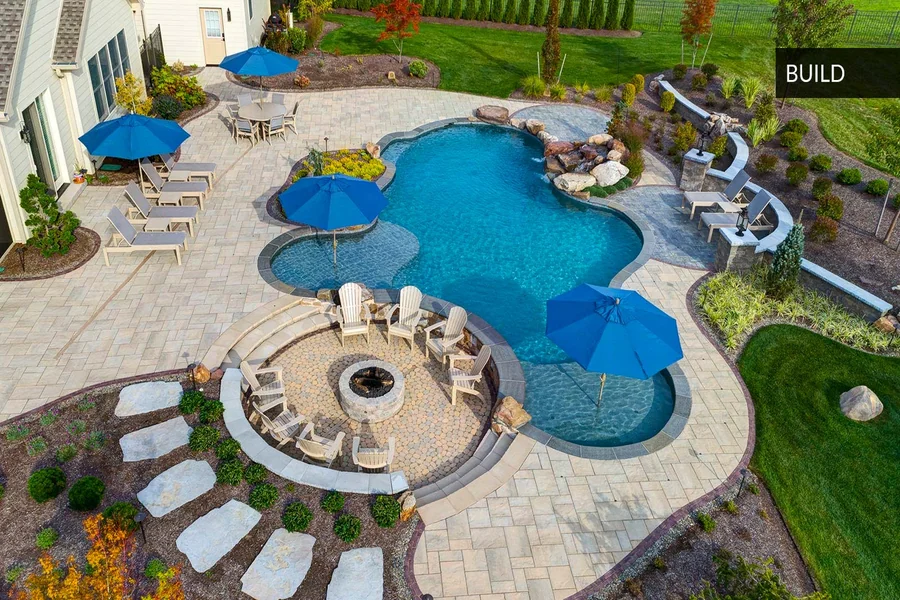
Swimming pool design is so much more than digging a hole and filling it up with water. The ideal pool will show in how you intend to use it, how it integrates into the area around it, and how it enhances your home’s overall design. Whether you’re creating a pool for leisure, exercise, entertaining, or family recreation, good design is a key factor in how well—and usefully—it will function.
The point of beginning is typically the size and shape of the pool. Rectangular shapes are good for lap swimming, but freeform or curved shapes could be good for small spaces in the garden or where a naturalistic appearance is desired. Depth, entries, and whether there will be built-in seating or shallow areas for kids are also considerations.
Other factors to consider are sunlight, exposure to wind, and how it will lead on from the rest of the garden or patio. Ideally, access should be easy from the house while offering privacy and maximizing natural light during the day.
Selecting Materials and Finishes
The finishes placed around and in the pool have the capacity to completely alter its look and feel. For the interior of the pool, finishes such as mosaic tiles, stone, or plain renders are common. They not only alter the texture and hue of water but also the level of maintenance and durability.
For poolside surfaces, non-slip finishes are essential. Natural stone, porcelain paving, or composite decking are often used for their weather resistance and safety underfoot. Matching or contrasting the pool surround with existing garden paths, patios, or architectural features can help tie everything together.
Water elements such as fountains, spillways, or even basic lighting can provide an additional interest and sophistication. LED lighting, especially, can have custom colors and effects, bringing the pool space to life after sunset.
Including Features for Functional Purposes
Pool design also involves the important features you might not notice on a glance, like filtration systems, heating, and cover options. An integrated filtration system efficiently keeps the water clean and clear with limited chemical application. To provide extended swimming beyond summer if desired, adding an energy-efficient heating system can be a good investment.
Covers are important too—automatic or manual, an effective cover keeps the water cleaner longer and retains heat overnight. There are also designs that incorporate safety covers, which are most helpful for homes with pets or toddlers.
For those who want to optimize use, adding amenities such as a pool house, shower area, or even an outdoor shower can be significant. These don’t necessarily need to be big and costly but can create convenience and comfort for daily use.
Working With a Pool Designer or Contractor
Hiring a pool designer or expert contractor can remove much of the guesswork from the situation. They’ll look at the site, talk through how you intend to use the pool, and provide recommendations from local planning regulations, soil types, and maintenance over the long term.
Most design teams apply 3D modelling to demonstrate to you precisely how the pool will appear once finished, which is especially useful for visualizing layout and proportions. They can also take care of permits and make sure that all the building work complies with building controls and safety measures.
Though it may be tempting to do things cheaply or rush into a quick construction, swimming pools are a long-term investment. Spending the extra time ensuring you get the design correct in the first place will pay dividends in the future in terms of time and money saved, as well as providing you with a space to enjoy for years to come. Contact us for more information on Shiplake swimming pool design.
