

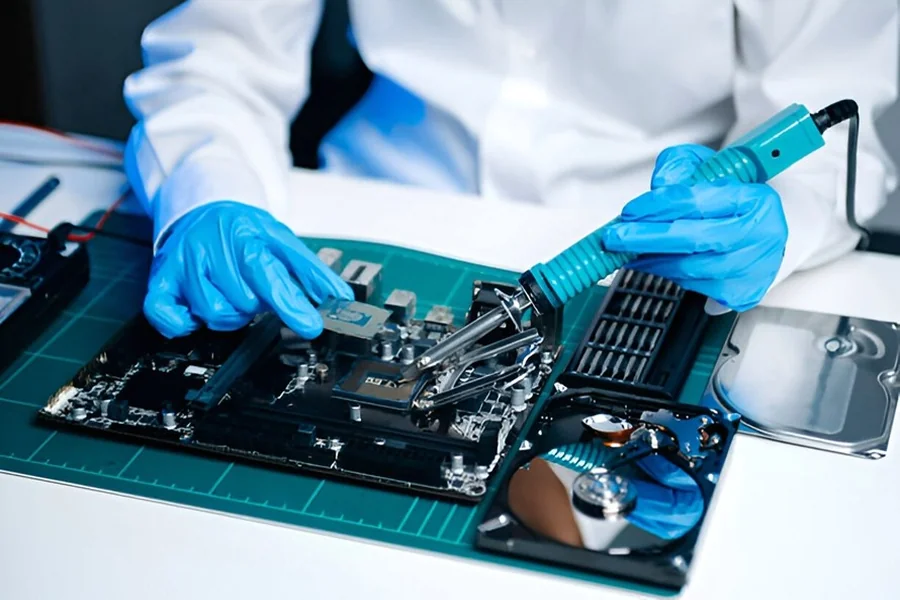
IC programming is the process of writing firmware, software, or configuration data into an integrated circuit so that it performs its intended function within an electronic system. It is a fundamental stage in electronics manufacturing because even a perfectly designed and assembled circuit board cannot operate correctly without properly programmed components. IC programming bridges the gap between hardware and software, ensuring that electronic products function reliably in real-world applications.
In today’s electronics industry, IC programming is no longer limited to simple memory writing. It involves precise control of microcontrollers, logic devices, memory chips, and system-on-chip components, all of which require accurate programming and verification to meet performance expectations.
Importance of IC Programming in Electronics Production
IC programming plays a vital role in determining the functionality, reliability, and security of electronic products. Whether the application involves consumer electronics, industrial systems, automotive controls, or medical devices, correct programming ensures that the circuit behaves exactly as designed.
Enabling Device Functionality
At its core, IC programming defines how a device operates. It sets logic rules, timing parameters, communication protocols, and control functions that govern system behavior. Without proper IC programming, even the most advanced hardware design remains non-functional.
Ensuring Product Consistency
Consistency across production batches is essential in electronics manufacturing. IC programming ensures that every integrated circuit receives the same verified firmware version, resulting in uniform performance across all finished products. This consistency is especially important for large-scale manufacturing where variations can lead to costly failures.
Types of IC Programming Methods
IC programming can be performed using different methods depending on the type of integrated circuit and production requirements.
In-System Programming
In-system programming allows integrated circuits to be programmed after they are mounted on the circuit board. This method is widely used because it supports firmware updates, debugging, and configuration changes without removing components. It is particularly useful for complex systems that may require late-stage software modifications.
Offline and Pre-Programming
In offline IC programming, components are programmed before assembly. This approach is often used for high-volume production where speed and efficiency are critical. Pre-programmed components can be quickly assembled, reducing overall production time while maintaining accuracy.
IC Programming and Quality Assurance
Quality control is closely tied to IC programming. Errors at this stage can cause system malfunctions, increased failure rates, or product recalls.
Verification and Validation
After IC programming, verification processes confirm that the correct data has been written and that the integrated circuit performs as expected. Validation ensures compatibility with the overall system, reducing the risk of software-related defects during operation.
Error Prevention and Traceability
Modern IC programming systems include error-checking mechanisms and traceability features. These systems record programming parameters, firmware versions, and serial numbers, enabling manufacturers to track issues and maintain compliance with industry standards.
Challenges in IC Programming
As electronic systems become more complex, IC programming faces new challenges that require advanced tools and expertise.
Increasing Firmware Complexity
Modern firmware often includes sophisticated algorithms, communication stacks, and security features. IC programming must handle larger code sizes and tighter timing requirements, making accuracy and reliability more critical than ever.
Security and Intellectual Property Protection
Security is a growing concern in IC programming. Unauthorized access to firmware can compromise product integrity and intellectual property. Secure programming methods, encryption, and access controls are increasingly important to protect sensitive data.
IC Programming in Different Industries
IC programming is used across a wide range of industries, each with unique requirements.
Industrial and Automotive Applications
In industrial automation and automotive electronics, IC programming must meet strict reliability and safety standards. Proper programming ensures stable operation under harsh conditions, including temperature extremes and electrical noise.
Medical and Consumer Electronics
Medical devices rely on precise IC programming to ensure patient safety and regulatory compliance. In consumer electronics, efficient programming supports rapid product updates and feature enhancements, keeping devices competitive in fast-moving markets.
Integration of IC Programming with PCB Assembly
IC programming is often integrated into the overall PCB assembly workflow. Combining programming with assembly and testing improves efficiency and reduces handling errors.
Streamlined Manufacturing Flow
When IC programming is performed as part of the assembly process, manufacturers can reduce lead times and improve coordination between hardware and software teams. This integrated approach ensures that programmed boards are immediately ready for functional testing.
Cost and Time Efficiency
Integrated IC programming reduces rework and minimizes production delays. It allows manufacturers to identify issues early, saving both time and cost during large-scale production runs.
Choosing the Right IC Programming Partner
Selecting a capable partner for IC programming is essential for product success. Experience, advanced programming equipment, and strong quality control processes all contribute to reliable outcomes. A trusted partner understands component requirements, firmware compatibility, and production scalability.
Conclusion
IC programming is a crucial element of electronics manufacturing that directly impacts product functionality, reliability, and quality. From defining device behavior to ensuring consistency across production batches, it plays an indispensable role in modern electronic systems. By working with an experienced printed circuit board assembler that offers integrated IC programming and assembly services, businesses can achieve higher efficiency, reduced risk, and dependable performance throughout the product lifecycle.
